Enfield Town rubbish collection guide for narrow streets
Posted on 09/06/2026

If you live, work, or manage property in Enfield Town, you already know the awkward bit: rubbish collection can be straightforward until the street gets tight. A parked car, a narrow pavement, a low-hanging branch, or a bin that's just a little too heavy can turn a simple collection into a minor exercise in patience. This Enfield Town rubbish collection guide for narrow streets is designed to make that process easier, safer, and a lot less frustrating.
Whether you are dealing with household rubbish, a one-off clearance, builder's debris, or a bulky item that will not fit neatly into a standard bin lorry routine, the details matter. In narrow streets, success is usually about planning, access, timing, and choosing the right collection method. Nothing glamorous, but very practical. And to be fair, that is exactly what people need.
Below, you will find a clear, local-friendly guide to how narrow-street rubbish collection works, where problems usually happen, what to do before collection day, and how to reduce the chances of missed pickups or blocked access. If you are comparing services too, we'll touch on that as well.
Why Enfield Town rubbish collection guide for narrow streets Matters
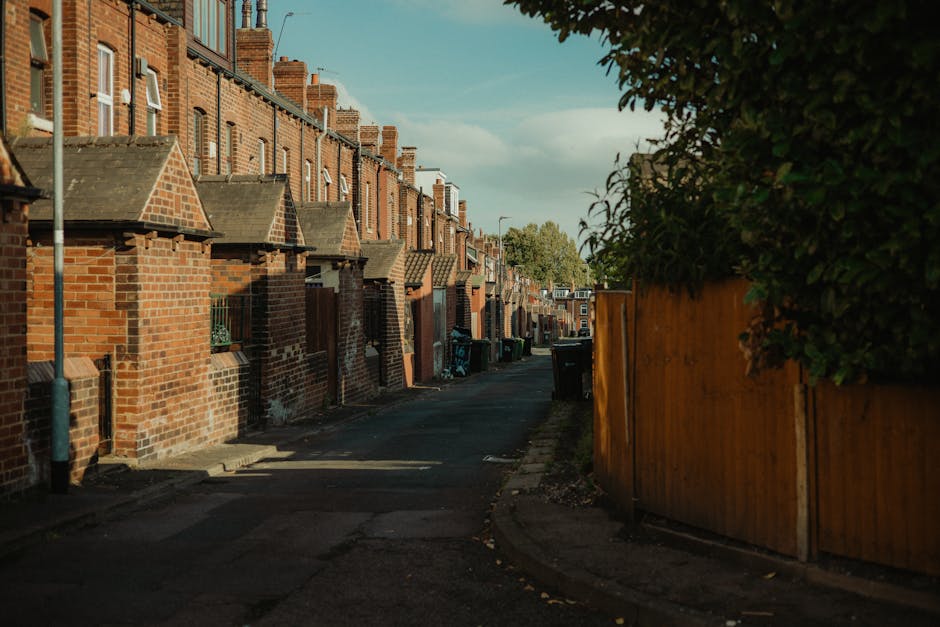
Narrow streets change everything. A collection that would be simple on a wide road can become awkward if vehicles cannot pull in safely, bins cannot be placed at the kerb, or waste stacks up in a way that blocks pedestrians. In Enfield Town, that matters because many streets have real-world constraints: limited turning space, on-street parking, older layouts, and footways that are not generous enough for large wheeled bins to be left out for long.
The core issue is access. Waste has to be moved without creating a hazard, and that can affect what type of collection makes sense. A standard bin day may work fine for regular waste if the bins are positioned correctly, but bulky waste, garden cuttings, furniture, or renovation debris often need a more tailored approach. That is where a local collection plan is worth its weight in gold.
There is also the neighbour factor. On a tight street, a misplaced sack or a bin left half on the pavement can inconvenience everyone. People notice. The sound of wheels on uneven paving, the early morning noise, the need to shift a car at the last minute - all of that adds up. A careful plan keeps things calmer.
If you are trying to choose between a one-off removal and a broader clearance service, it can help to read more about the wider range of support on the services overview and the practical difference between household, office, and bulky-item collections. For waste-heavy projects, builders waste disposal in Enfield can also be relevant when access is tight and debris needs to be moved efficiently.
How Enfield Town rubbish collection guide for narrow streets Works
On narrow streets, rubbish collection normally works in one of a few ways. Sometimes the collection vehicle can safely access the road if parked cars are managed and the route is clear. Sometimes waste has to be brought a short distance to a better pickup point. In other cases, a smaller vehicle, a manual loading approach, or a segmented collection plan is needed.
The practical question is not simply "Can it be collected?" It is "How can it be collected without causing disruption?" That distinction matters. A good collection process considers vehicle size, turning room, slope, pavement width, bin weight, and whether items can be handled without damaging walls, railings, or cars parked a few inches too close. Very London, really.
For standard domestic rubbish, collections are usually most successful when bins are presented neatly and access routes are kept open. For larger loads, the approach may involve:
- moving waste into smaller, safer bundles
- loading from the property edge rather than deep inside a narrow lane
- splitting the collection into more than one load
- choosing a collection time that avoids peak parking pressure
- using a service that is comfortable with tight-access work
It is also worth separating what should be recycled from what should be general waste. If you are dealing with mixed household items, the guidance on recycling and sustainability can help you think about sorting before collection rather than after. That saves time, and usually money too.
Key Benefits and Practical Advantages
When you plan rubbish collection properly on a narrow street, the benefits are immediate. You save time, reduce the chance of a failed pickup, and avoid awkward back-and-forth with neighbours or the collection crew. More than that, the whole job tends to feel less stressful. Which, let's face it, is half the battle.
Here are the main practical advantages:
- Better access control: You know exactly where waste can be left without blocking the road.
- Fewer missed collections: Clear presentation and the right timing reduce avoidable problems.
- Lower safety risk: Heavy items are moved in a safer, more organised way.
- Cleaner kerbside presentation: This matters in close-knit streets where clutter is noticed quickly.
- More efficient sorting: Recycling, furniture, green waste, and mixed rubbish can be separated more sensibly.
There is another benefit that is easy to overlook: a tidy collection process protects relationships. On narrow streets, people often share parking space, sightlines, and a bit of daily friction. A well-organised waste collection avoids unnecessary tension. That may sound small, but in real neighbourhood life, it is not small at all.
For residents preparing a move, clear-out, or sale, useful local context can also help. Articles like buying homes in Enfield and local insights on living in Enfield give a feel for how day-to-day access and property layouts can affect practical decisions. Slightly mundane, yes. Still useful.
Who This Is For and When It Makes Sense
This guide is for anyone who has to get waste out of a property on a road that is not particularly forgiving. That includes homeowners, tenants, landlords, letting agents, estate managers, shopkeepers, office managers, and builders working on compact plots. If the phrase "where do we put the bags until collection?" has ever come up in a meeting, this is for you.
It makes sense whenever waste volume, access difficulty, or time pressure starts to matter. Typical situations include:
- weekly household rubbish on a street with limited pavement space
- bulky items that cannot be carried far without causing obstruction
- garden waste after pruning or seasonal clear-outs
- pre-sale or post-tenancy clearances
- office moves with limited loading access
- builder's waste where rubble, timber, and packaging need careful staging
If you are managing a property close to the centre of Enfield Town, the issue may be even sharper. Narrow access, older terraces, and on-street parking often combine into a pretty neat little challenge. Not impossible. Just one that needs a bit of forethought.
For larger household jobs, house clearance in Enfield can be a better fit than trying to piece things together collection by collection. The same logic applies to workspaces too, especially if you need office clearance support for desks, chairs, files, and old equipment.
Step-by-Step Guidance
Here is the cleanest way to approach rubbish collection on a narrow Enfield Town street.
- Assess the access first. Walk the route from the property to the road and check where a vehicle, trolley, or collection crew could actually move safely.
- Separate waste by type. Put general rubbish, recycling, bulky items, garden waste, and construction debris into their own groups.
- Measure the awkward bits. If an item is bulky, check door widths, stair bends, hallway turns, and pavement pinch points. Sounds obvious, but people skip this all the time.
- Choose the best collection method. Standard bin pickup, kerbside loading, same-day removal, or a dedicated clearance job all serve different needs.
- Plan the timing. Aim for a slot when parking pressure is lower and the street is less busy. Early mornings can work, but not always.
- Keep the route clear. Move cars if possible, fold back bins neatly, and avoid leaving loose bags where they can blow over or spill.
- Confirm what will and will not be taken. Some loads contain restricted items or mixed materials that require separate handling.
- Inspect the area after collection. A quick final check avoids missed debris, staining, or small items left behind.
If the job includes bulky household items, a specific collection route may be better than a general rubbish pickup. If it includes damaged sofas, tables, or wardrobes, furniture disposal in Enfield is usually a more direct solution than waiting for kerbside convenience to appear out of nowhere. It rarely does.
And if you are dealing with garden clippings after cutting back hedges that have done a bit too well this year, garden waste removal in Enfield can save a lot of bag shifting and repeated trips to the kerb.
Expert Tips for Better Results
After enough collections, a few patterns become obvious. The best outcomes are almost always the result of careful staging and realistic expectations.
1. Treat the pavement as a working space, not storage. Narrow streets leave very little room for error. Put waste out only when needed, and only in the layout that makes loading simple.
2. Think in terms of load shape, not just weight. A light but awkward item can be harder to move than a heavier, stackable one. Long boards, loose branches, and odd-shaped furniture need more planning.
3. Use repeatable routines. If the same street gives the same problem each week, change the routine, not just the complaint. Maybe the collection needs to happen later, or maybe waste needs breaking down sooner.
4. Keep materials dry where possible. Wet cardboard, soaked bags, and soggy green waste are harder to handle and messier to load. A simple cover can make a real difference on a drizzly morning.
5. Be honest about access. If a vehicle cannot safely get in, say so early. It saves everyone a little faff and stops the job being delayed on the day.
One small real-world observation: a street that feels "fine" on foot can be a very different story once a waste vehicle, trolley, or two people carrying a cupboard try to move through it. The gap always seems smaller in real life.
For service quality and safety expectations, you can also review insurance and safety information before booking anything complicated. It is not the most exciting reading, granted, but it tells you something important about how the work is handled.
Common Mistakes to Avoid
Narrow-street collections usually fail for boring reasons. That is the annoying part. It is not dramatic; it is practical. Here are the mistakes that cause most trouble.
- Leaving waste too early: Bags can split, scatter, or block the pavement overnight.
- Overfilling bins: A lid that will not close is more than a cosmetic issue; it often causes handling problems.
- Ignoring parking pressure: If the street fills up before collection time, the truck may not get close enough.
- Mixing materials carelessly: Recyclables, food waste, and general rubbish should not be thrown together just to save a minute.
- Forgetting access on both ends: The issue is not just the front gate. The whole route matters.
- Assuming a standard pickup will handle everything: Some jobs need a tailored collection, not a one-size-fits-all approach.
There is also a habit people develop when they are rushed: they try to make the street fit the waste instead of the waste fit the street. That seldom ends well. Better to break things down properly than to discover, at 7:15 a.m., that the alley is basically useless for a large wardrobe.
Tools, Resources and Recommendations
You do not need specialist equipment for every collection, but a few practical tools can make a big difference on a narrow road:
- Heavy-duty refuse sacks for secure bagging and easier lifting
- Bin straps or lids that close properly to stop spillage
- Gloves and sturdy footwear for safer handling
- Foldable trolleys or dollies for moving items over short distances
- Dust sheets or covers for messy or weather-sensitive items
- Measuring tape for awkward furniture and access checks
In our experience, the simplest recommendation is often the best: sort early, stage neatly, and do not let the collection area become a storage area. That one habit solves a surprising number of problems.
If you want to understand how a collection fits into a broader property clean-up, the articles on furniture disposal and house clearance are useful companion reading. For smaller, more routine needs, a dedicated waste collection service in Enfield may be the right next step.
Law, Compliance, Standards, or Best Practice
Waste handling in the UK is not just about convenience. It also touches on proper duty of care, safe handling, and responsible disposal. You do not need to become a compliance expert to get the basics right, but you do need to avoid casual shortcuts.
As a general rule, anyone arranging waste collection should make sure the waste is handled by a competent service, stored safely before pickup, and separated appropriately where recycling or special handling is needed. For businesses, the expectations are usually stricter, particularly where mixed commercial waste, confidential materials, or builder's waste are involved. For householders, good practice still matters. It is still your waste until it is properly collected and transferred.
On narrow streets, the safety piece is just as important as the disposal piece. Items should not be left where they obstruct access for pedestrians, wheelchairs, pushchairs, or emergency services. That is not overcautious; it is just sensible. The best collections are the ones nobody has to think about twice.
If you are booking a service for a property with tricky access, it is worth checking the provider's operational details and payment process too. The pages on payment and security, terms and conditions, and privacy policy can help you understand the administrative side before you commit.
Options, Methods, or Comparison Table
If you are choosing how to manage rubbish on a narrow street, it helps to compare the options side by side. The best choice depends on volume, urgency, item type, and access.
| Method | Best for | Advantages | Trade-offs |
|---|---|---|---|
| Standard bin collection | Routine household waste | Simple, familiar, low effort | Limited flexibility if access is poor |
| Kerbside manual loading | Small to medium volumes | Useful where vehicles cannot enter fully | Requires clear staging and careful timing |
| Bulky waste pickup | Furniture, mixed household items | Handles larger loads more cleanly | May need better access planning |
| Garden waste removal | Clippings, branches, soil-contaminated green waste | Keeps messy waste contained | Needs sorting and safe bagging |
| Full clearance service | Moves, refurbishments, estate clear-outs | Best for complex or high-volume jobs | More planning, but usually less hassle overall |
A quick rule of thumb: if the street is the main problem, use a method that reduces vehicle dependence. If the waste volume is the main problem, use a method that reduces repeat trips. Simple enough in theory, a bit fiddly in practice, but that is why planning matters.
Case Study or Real-World Example
Picture a narrow terrace road in Enfield Town on a damp Tuesday morning. One household has three bags of mixed rubbish, a broken dining chair, cardboard boxes from a recent delivery, and a hedge-cutting pile that has been sitting in the side return since Sunday. Parking is tight. A van is already half on the opposite kerb. The bins are technically out, but not neatly.
What usually goes wrong in that scenario? The bags get split across the pavement, the chair is left until last, and someone has to shuffle items around while trying not to block a neighbour's gate. The result is slower collection and a slightly annoyed street. Nothing catastrophic. Just messy.
Now the better version: the household breaks the cardboard down the night before, separates the garden waste, keeps the chair ready by the front access point, and holds the bags inside until the agreed collection window. The route is clear, the items are sorted, and the load can be handled in one go. The difference is not luck. It is structure.
That kind of planning is especially useful when a move or refurbishment is underway. If you are in the middle of a property transition, a clear collection plan can stop waste from becoming the thing that slows everything else down. And that, oddly enough, is often the last thing people expect.
Practical Checklist
Use this before collection day.
- Have I checked the narrowest part of the route?
- Are cars, bins, and loose items keeping access clear?
- Have I separated rubbish, recycling, garden waste, and bulky items?
- Are bags sealed and containers not overfilled?
- Have I measured large items against doors, stairs, and turning points?
- Is the collection time sensible for parking and traffic on this street?
- Do I know what the service will and will not take?
- Have I prepared any wet, dirty, or awkward materials safely?
- Is the collection point visible and easy to reach?
- Have I checked the area for spillages after the job is done?
Quick takeaway: the cleaner the access, the simpler the collection. It really is that plain.
Conclusion
Narrow streets in Enfield Town do not make rubbish collection impossible, but they do make planning non-negotiable. If you think about access first, sort waste properly, choose the right collection method, and keep the route clear, most of the usual headaches simply do not appear. That is the real advantage of a good narrow-street strategy: it turns an awkward job into a manageable one.
If you are preparing for a move, a clearance, a garden tidy-up, or a regular waste routine on a tighter road, take the time to choose a service that understands local access conditions. It saves effort, avoids wasted trips, and keeps the street a little calmer for everyone. Nice when that happens, isn't it?
Get a free quote today and see how much you can save.
And if you are still weighing up the wider context of moving, living, or investing in the area, it can help to explore an authentic Enfield perspective or even Enfield real estate investment strategies for a broader local view. Little things, perhaps, but they do add up.

 Tipper Van - Junk Disposal and Waste Collection Prices in Enfield, EN1
 Luton Van - Junk Clearance and Waste Collection Prices in Enfield, EN1


